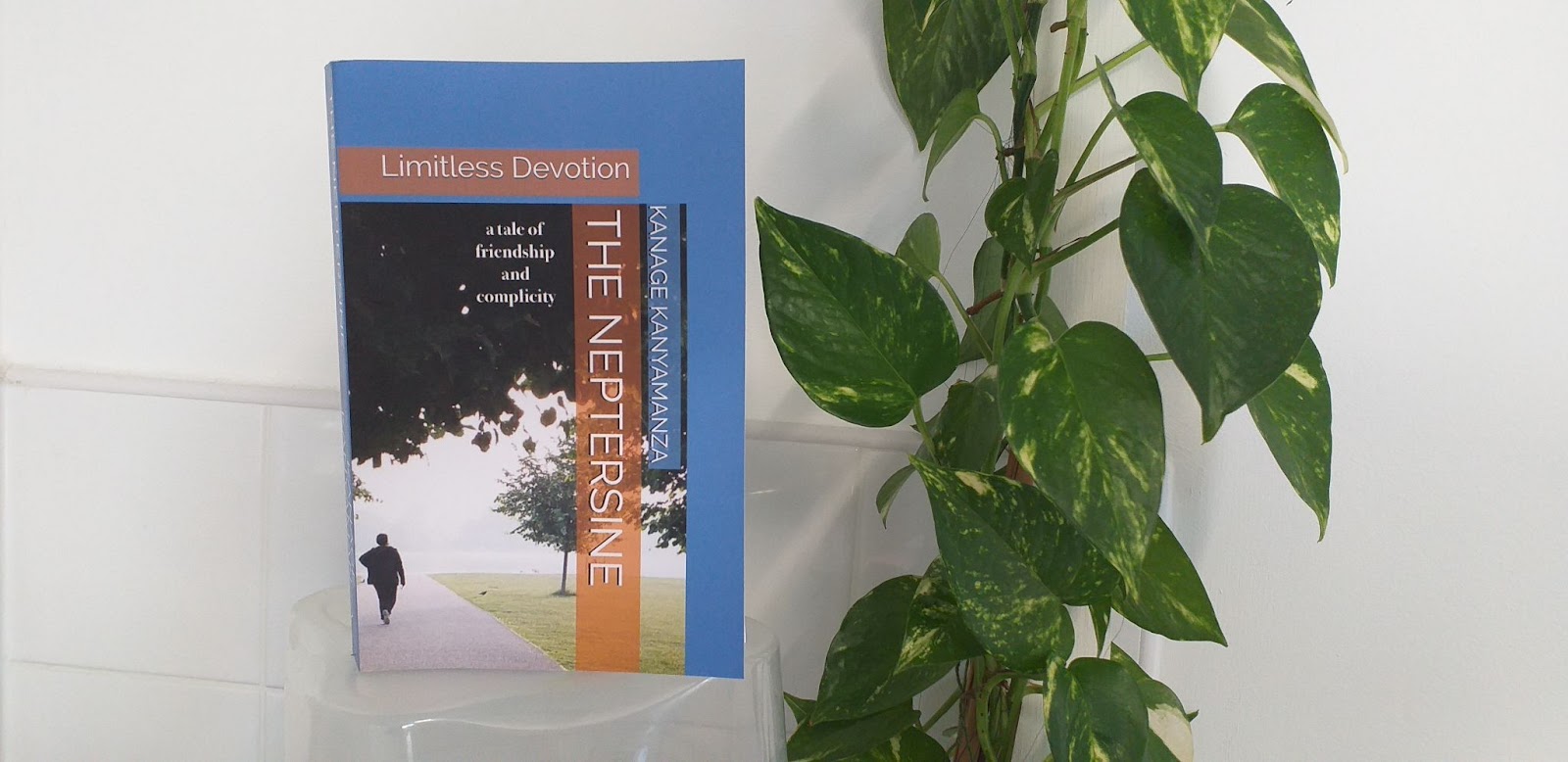
On Amazon Kindle, you can read the crime fiction book at a price of $0.99 ONLY, which is 80% discount from the previously displayed price of $5.06.
In its Amazon Paperback format, the book’s price has gone down by 20% and stands now at $15.99 ONLY from $20.00.
If you live in the UK, the paperback version can also BE delivered at ONLY $11.11 by using PAYPAL. You could send your payment to kanage.kanyamanza@gmail.com. You would need also to indicate your complete DELIVERY ADDRESS through the same email.
It will take between 4 and 7 days before you receive your book.
I hope you will enjoy the landscape, characters, and emotions that feature in the world the story makes the reader navigate through, come across and experience.
Kanage Kanyamanza, pseudonyms of the real names of the author of the above book, has never published any book before. However, this doesn’t give him total fairness in the public arena of published work. The reason is that he produces articles regularly and uses online tools and social media for their dissemination. While he borrows names for his initial book, he tells whoever wants to know that he has his reasons to proceed that way. To one of his editors, he promised to reveal them only once he become famous. And to those familiar with the context of his roots, they can easily guess his unrevealed references.
His crime fiction book, of which title “The Neptersine” comes as an anagram of London’s artificial river The Serpentine, emerges uniquely packaged. Not only, Haile Mohamed, the main character, is rescued from a suicidal inclination by Amina Ye, Hussein Daniel’s girlfriend, but he actively covers up for the attempted murder of the latter. Florencia Carlos, who masterminds the plot, is Amina’s twin sister. After the incident, Haile would go as far as killing Hussein in the hospital, to prove his devotion to his lover. Hussein had fallen in a coma and stayed in a vegetative state for years after he had escaped the planned plot on his life.
Though Haile Mohamed became a criminal because of what he had done at the insistence of his lover, Amina Ye, he rose to fame as a successful storyteller, many years after the incident. The intimacy they both developed had even evolved into marriage. On the outside, while they jogged together, he resembled any other ordinary guy minding his business, but inside he was a culprit who hadn’t been exposed or found out.
There are some unconventional promotion methods the author plans to use for his book. Among them, the focus will be the book’s mention scheduled to be run alongside the gathering of alive writers from his community who are reachable; thanks to the publication of The Neptersine, pen lovers whose imagination have entertained many will be able to come together and address issues regarding their profession from a novel perspective.
While embarking on the writing of the book, the author had completed reading Haruki Murakami’s “What I talk about when I talk about running.” He had as well been a regular jogger along the Neptersine – a pseudonym for the Serpentine – river. The way running invigorated Murakami and inspired his writing, they almost did the same in his case. This launch proves sufficiently that such approaches combined with others added to the overall performance that was to be achieved.
To order a copy of the book, one can get it on Amazon.
A crime fiction book that took three years or so to complete. Contrary to what one would expect, the period of the COVID pandemic helped in a positive way. Without the distraction of a television, more focus could be put into the editing process.
One would wonder who are the target readers. They are:
University students Young professionals Teachers, and Lovers.
These categories of people are those whose lives are narrated in this crime fiction BOOK inspired by readings from two Japanese writers: Haruki Murakami and Keigo Higashino. The regular jogging that the author was doing when the idea of writing emerged in his mind was as well part of the motivating factors.
For the publication’s purpose, he used a pseudonym referring to his region of origin and the name of his most remote ancestor.
You can find the book on Amazon and order it from there.
You can also read the book for FREE for a month on Amazon Kindle. But you need to cancel your subscription before the end of the month. If not, you will be charged £3.60.
A review of the book, positive or negative, will win you a FREE collection of poems, to be published by mid-November 2021. You could send your review to this email address: kanage.kanyamanza@gmail.com.
The panel is being hosted over Zoom by the Centre for Geopolitics, located at the Alison Richard Building
“Until lions have their historians, tales of the hunt shall always glorify the hunters,” says a West African proverb. We, the hunted, need to start telling our own story.
In reaction to an invitation from the University of Cambridge to the Canadian author of the book “In Praise of Blood, the crimes of the Rwandan Patriotic Front,” Judi Rever, for a talk on 21 April 2021, a list of western and other scholars, journalists, scientists, researchers and historians wrote to the Chancellor raising their concerns about the platform offered to her to present her findings of 20 years of investigative work in the Great Lakes region.
Judi Rever
Her book, substantiated with more than 200 Rwandan Patriotic Front’s defectors, former soldiers and survivors, brings up the discreet killings that Kagame’s forces committed ruthlessly against Hutus in the dark while the Interahamwe slaughtered Tutsis in the daylight. She concludes by acknowledging the genocide perpetrated against Tutsis, and at the same time questions why the RPF’s masses crimes, among them a genocide against Hutus has not only been ignored but the perpetrators are internationally praised instead of being pursued.
We, the undersigned, Judi Rever’s work supporters and survivors of the RPF’s masse crimes, are world’s citizens, Hutus and Tutsis that life spared miraculously from October 1st, 1990 to 2003, almost for a purpose to tell the world the only truth experienced by direct witnesses of what happened. From that period, there are crimes our parents and families fell victims of and which were erased from the history books that our “scholars” don’t mention at all in their research work.
These crimes took place initially between the start of the civil war and April 6th, 1994 when president Habyarimana was assassinated. Tens of thousands of peasants from Byumba and Ruhengeri in the north east of Rwanda died in the hands of the RPF, but aren’t accounted for anywhere. The second period that saw the decimation and masses killings of our people, that the Mapping Report characterised as of genocide nature once investigated by a court, occurred between 1993 and 2003 in the Democratic Republic of Congo.
We feel strongly wronged and angered when some personalities, whatever their intentions and academic or professional credentials, claim to represent what we experienced without any mandate from us. They should stop. On one hand, their opposition to the presence of Judi Rever at the University of Cambridge shows their lack of any humanity. They should be ashamed. On the other hand, some of them have built their careers on spoon-fed lies provided by the RPF of president Kagame. Consequently, they find it hard to keep quiet when the truth is offered a public stand. If they don’t do something, they could irremediably risk their credibility and future. To some extent, their situation could seem understandable, but not excusable because there are the lives of the survivors of the genocide against the Hutus on the line.
What is surprising is that some of Judi Rever’s discreditors know the truth but publicly display and pretend an incredible ignorance at the extent of defending the crimes’ perpetrators, because that suits them and their interests. Their attitude inclines to demonstrate that it’s not anymore about what Judi Rever explains from her book, but what they want her to cover up by not stating the facts, as they themselves did for the last 27 years.
As Pr Charles Kambanda wrote on October 24, 2014 in an open letter at the release of the BBC documentary ”Rwanda: Untold Story,“ while reacting to a similar group of personalities, ”Genocide denial should not become a social-political tool to suppress critical thinking, human intelligibility and human freedoms.” Judi Rever’s detractors should respect her freedom of expression as long they fear to discuss in an open debate her findings on a second genocide in Rwanda.
Signed:
From the source which compiled the signatures, we learn that they collected 352 including some from the children of feu president Habyarimana. Their list was sent to the Centre for Geopolitics at the University of Cambridge organising the talk.
From the minute 40:09 up to the minute 52:37 of the video.
Idamange Iryamugwiza Yvonne is a Rwandan human right activist who, from Rwanda, published a series of youtube videos, starting from January 31 up to February 15, 2021, the day when the Rwandan Investigative Bureau (RIB) arrested her. This is the final part of her last video published on her last day of freedom. By the time of this writing, she had already appeared in court twice where she denied all the accusations. The court kept her in prison for another 30 days.
You have to stand up (2X). On this day of 16/02/21, we should all stand up, and walk up to Urugwiro (the President’s office). Firstly, they have to bring back Bahati before they kill him. They have to give us Bahati if they haven’t killed him yet. (eennn…) Even if they’ve killed him, they need to show us his body. You need to stand up. They have to confirm to us that they killed our people. They should stay put and face justice because they cannot bring them back. They cannot bring back Kizito and others. (ennn…). They have to agree on that and confess their sins.
They have to confirm to us willingly that our country doesn’t have a president, but it is instead led by a dead body. They should let us vote for the one we want. Democratically. Do you understand? Do you understand that? You, members of AGATSIKO? If you don’t resign, the Almighty is coming for you. I am telling you. You should do that while you still have time.
I am asking the Rwandan soldiers, the national police, to preserve the safety of every citizen who will join to go out and advocate for their revolution. Those from the city of Kigali, we will meet at Urugwiro. The one who can start their march at 7:00 am; at least by 9:00 am, we will have people already at Urugwiro. I will repeat for the security forces including the police, you are requested to ensure the safety of Rwandans going after their revolution. You are security forces for Rwandans, but not for Agatsiko of assassins. Those from the provinces, you will go to your district’s office, please select among yourselves your leaders, then we will stand up and seek democracy we long for; let’s advocate for democracy we need to have, but that we don’t have presently.
Let’s seek true reconciliation, and let’s not get them to mislead us, while they divide us; let’s fight for our rights (2X). Those who are abroad, you shouldn’t sit down and relax; if you don’t do anything, the Almighty will punish you. Everyone who doesn’t take part in this action, let me tell you (X2), the Almighty will punish them. He will keep them in eternal slavery. Moretekan told Esther that the purpose of her coming to the royal court was for her to become useful when the time would be convenient. It wasn’t for you to come and enjoy royal niceties, while your people were suffering. He also added that, in case you don’t accomplish your mission, the Jewish tribe will be saved but you and your family will perish. I should repeat this at your intention, Rwandans. I am repeating this for you. Wherever you are, those who are dying from fear, afraid to get out of that state, those who became fear’s instruments, and those saying that they are favoured by the regime, anyone who won’t take part in this coming revolution, will only watch while others will enjoy the outcome. That won’t stop the Almighty from saving his tribe. I am telling you. That won’t stop Him. However, anyone who will have been a bystander, indifferent, that one will be cursed with his family. That’s why I am calling you to stand up: those in Kigali, provinces and abroad, whichever country you are in. Everyone needs to do something. Because, as I told you, I used to have that false peace they boast about. I was clean and that’s the reason they couldn’t find any sin to link me with. They then accused me of belittling genocide. I have four children. I am a mother. (iii..) I don’t have anyone who would look after them if I died. But I decided to sacrifice my life, my children. Don’t you see that they have been harassing/intimidating me, kidnaping my child, aren’t intelligence’s vehicles continuously circulating in front of my gate. Why don’t I have fear? When you look at me, do you think I am a terrorist? Why would I become a terrorist? (X2) Let me tell you. I don’t even have anyone in prison, in case I would have a strong resentment against the regime, for those people I would fight to get them out. There was nothing to make me radical. I became radical because of the bad governance which is impacting my people. I want Rwandans to have peace. I want them to be free. I want to release them from the yoke of the enemy. If I am the one that the Almighty is using, stand up with me. If you don’t support me, the Almighty won’t judge me. If you want to remain in your enslavement, you will remain there. I believe in the Almighty and I know nobody has ever won over Him. It’s Him who sent me. To announce His message to the Medi and Perses. He sent me to talk to them because I knew them. I knew them very much. Assess yourselves, release cowardice and fear from your personality, get rid of this wrong understanding saying that we are divided along ethnic lines, don’t look at people under the ethnic loops of Tutsi or Hutu. Take Action. Rwandan Security Forces, take action and support (this call for a revolution). If you decide not to support, the Almighty will curse you in daylight. Those aware that their hands are clean of any blood, take action. Stand Up and do something. Since I came to realise who I am, that I am not a product or rice for sale, if somebody else emerges tomorrow like me, and then be bought, how will our misery end? Please don’t, don’t!
NO. NO. NO. The time is now. The time has come to end our misery. We want a revolution (2X). We stand up claiming democracy, we aren’t standing up destroying anything, killing anyone or doing anything else, we are opposed to seeing that our country could again experience bloodsheds, caused by AGATSIKO (small group) of villains interested only in its privileges. Looking only after their interests. Only interested in their privileges. I am not afraid of any from those who are notorious criminals among them.
I told you I don’t have any fear of dying. I told you I don’t have it. It’s the reason I have all these Rwandans presently supporting me. We don’t have any government. The government doesn’t operate anymore. It is finished. I have even removed it, for you to know. I have removed it, using this weapon (while showing her bible to the camera). This One. This zombie-like government is only a shadowy presence (Balinga). It ended its active existence long ago.
Stand up and let’s get the Almighty support because He won’t help while you are sitting idly. However, while you will be reflecting on your stand, compare yourself to Yvonne who is so young, not an old woman, nor suffering from deadly illnesses which might have incapacitated her in some ways, without any problem to justify her suicide, who has children who could suffer in case I die, who has a family that needed my support to live, my family is spending days crying, they are not eating, nor drinking. They are extremely sad. They are daily asking me why I am doing this, given the consequences. However, I cannot feel calm at all. I cannot be at peace while Rwandans are suffering. My family has to understand because I don’t have a choice. I know I did put my family in a critical situation, but I couldn’t calm down. I told them that I wasn’t anymore Idamange of my family. I am Idamange of the entire country. (sobbing…) I know you need me, but my country needs me more. …I don’t belong to my family only anymore. I belong to the whole country. Why don’t you understand? Do you consider that I am of the age to commit suicide, do you think I don’t want to look after my children, aren’t they great children I needed to look after? Why don’t you get it? Why don’t you get rid of your cowardice? I am not even an old girl you would say that because I couldn’t get a husband, I am resorting to suicide. Or even assuming that in case I die nobody will shed a tear. Why can’t you use your brain? Me accepting to put aside everything and sacrifice my life to this cause. I had all that peace they talk about. However, I couldn’t be at peace, and sleep at night, while seeing the suffering of the Almighty’s people.
Forgive me, I have to end here. Forgive me, I have to end here, I don’t feel well. But, tomorrow, the protest will start before sunset. We will go peacefully and start early at 7:00 am, even 6:00 am for those who can. However, make sure, and agree to meet at Urugwiro at 9:00 am. The placard to use will be this one (showing the bible). Others meet at the districts’ offices. Others find a convenient site to go and easy to reach. Rwandans who are in foreign countries, if you don’t seriously participate, I guarantee you will not be welcome home. That’s the truth I am telling you. Don’t be cowards. Don’t sit indifferently, and be at peace and eat, because you are abroad, we need to be together in this struggle. Every Rwandan who feels that this is not their fight will be cursed. They will be able to know about their country, but they won’t be able to live in Canaan. I am truly telling you. As those who want our people to remain enslaved forever, they will only look at the country, but they won’t live in it. They won’t harvest its fruits, neither eat its honey nor drink its milk. Everyone wherever you are, even those who need tickets you should give them to them, but we need to stand up. They could at least give us Bahati if he is still alive, but we should leave the place, having gained democracy.
Thank you.
The agreed day is 16/02. Early morning.
Eh…
I had forgotten to tell you that, as soon as I leave the camera, they might rush to my house and take me to prison. Even if they arrest me, don’t stop. If they arrest me, don’t stop. In every area, find Idamange among yourselves to lead you. Don’t stop. Continue standing up. Continue, the Almighty will be with you. Even me, he won’t abandon me.
Thank you. I have to stop here. I cannot tell you more. It’s an opportunity to say goodbye, it might be my last time on this channel, on this social media. Because they warned me about that, saying that I wasn’t to ever speak out again, but keep quiet, that if I didn’t stop speaking out what would follow would be to kill me.
They could also proceed in a more civilised way, by analysing this video and getting this time evidence of offences to get me imprisoned.
You understand well. To be back soon, this is impossible.
I say goodbye and love you dearly.
I am ready for what is coming. Don’t worry. I am not afraid. I told you about prison, that it doesn’t scare me at all. I rehearsed all these things. It doesn’t scare me at all.
There is the one to imprison, but there is also the Almighty.
Even death doesn’t scare me. I overcame death. If I didn’t, I wouldn’t have come here to share this message with you.
Let me repeat for your understanding. I am not a politician. And I am not a known figure in Rwandan affairs.
I don’t have any political party I intend to set up or already have.
I am not someone who calls the citizens to disobey the authority, the same way they have interpreted my call, to accuse me.
I am a person who is advocating for citizens’ human rights.
THANK YOU VERY MUCH. THE ALMIGHTY BLESS YOU IN EVERYTHING.






 Rising Continent
You must be logged in to post a comment.